Family Travel :Tips for Travelling with Babies, Toddlers, and Young Children
Family travel can be fun and stress free and today, multi generation trips are getting more common. In our family, we often take family trips with my mum and my brother’s family. With a set of triplets and a toddler under 4, any trip can be an expedition. Whether you are dreaming of sun-soaked beaches, city adventures or long road trips through the countryside, travelling with little ones is one of the most rewarding things a family can do together. Every new sight, smell, and experience becomes a shared memory that deepens your bond in ways that everyday life simply cannot. Travelling with grandparents is great as there are more adults around to help out and help the kids to bond.
That said, travelling with children from babyhood through the toddler years does require a little extra planning. Here is what you need to know to make your family trip smooth, safe, and genuinely enjoyable.
Plan Around Their Rhythms, Not Just Your Itinerary
The most common mistake new travelling parents make is trying to fit children into an adult travel schedule. Babies and toddlers thrive on routine, and while travel will naturally disrupt that, working with their natural rhythms rather than against them makes a significant difference.
Book flights during nap times or bedtime when possible. On road trips, time your longer stretches for when little ones are most likely to sleep. Build in buffer time between activities, toddlers move at their own pace, and a rushed schedule quickly leads to meltdowns. Think of your itinerary as a loose guide rather than a rigid plan, and resist the urge to overpack your days.
What to Bring: Packing Smart for Little Ones
Packing for children can feel overwhelming, but the key is to bring versatile items and resist the urge to over-pack. For babies, essentials include nappies, a portable changing mat, a compact baby carrier or travel pushchair, and enough food for the trip.
For toddlers, always pack their favourite stuffed toy or blanket. A small backpack or ride on Trunki they can carry themselves gets them involved and keeps snacks and a change of clothes within easy reach.
Flying with Babies and Toddlers

When I travel with my family with lots of toddlers under 4, there are lots of moving parts. We had it “easy” as we had 4 adults to 4 kids. So there were enough hands and laps to deal with the kids. During the flight, toddlers probably won’t sit in their own seats. Our gang wanted to sit with the grown-ups and move around a lot. We had lots of snacks and little toys for distractions. Anytime one was about to cry, we had to use any trick to divert and distract. This surprisingly worked really well. Luckily, our flight was tantrum free. We could have been the family from hell.
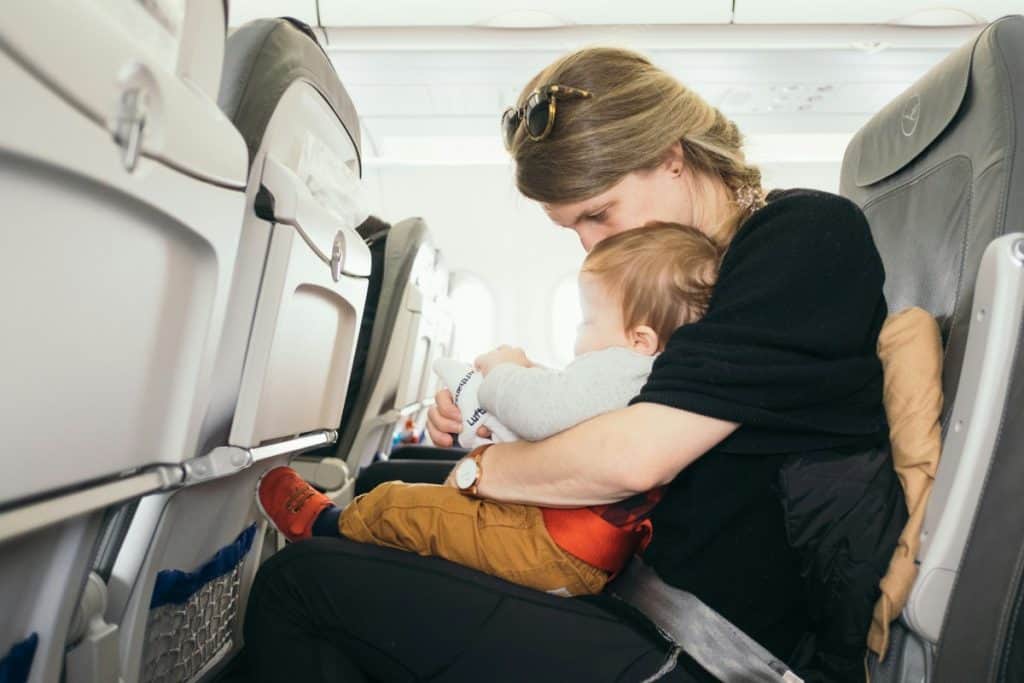
Airlines are generally more family-friendly than many parents expect. Most major carriers allow you to breastfeed or bottle-feed on board without any issues, and cabin crew are usually happy to help with warm water, ice packs, or a little extra space. When it comes to bringing formula or breast milk through security, the TSA treats these as considered medically necessary liquids, so they are exempt from the standard liquid restrictions. You can pack as much as your baby needs in both carry-on and checked luggage.
Ear pressure during take-off and landing can be uncomfortable for babies. Nursing, offering a dummy, or giving a bottle during these moments, encourages swallowing, which helps equalise the pressure. For toddlers, some sweets or snacks will do the same trick.
Feeding on the Go: Keeping Little Tummies Happy
Feeding is one of the biggest practical concerns for travelling parents and with good reason. Unfamiliar environments, disrupted routines, and different water supplies can all affect your child’s tummy.
For breastfeeding mothers, travelling actually simplifies feeding considerably, no equipment to carry or sterilise, and milk is always at the right temperature. For formula-fed babies, use clean boiled or bottled water to prepare feeds. Get rid of any prepared formula that has been left at room temperature for more than an hour.
Store breast milk in insulated cooler bags with ice packs to keep it below 4°C, which is safe for up to 24 hours. Powdered formula can be stored conveniently in its original container or pre-measured into a formula dispenser for easy preparation on the go.
If you’re using formula for babies, always mix it with clean, boiled water. It’s also worth knowing that some cow’s milk-based formulas have been linked to a serious intestinal condition called necrotising enterocolitis (NEC). The Enfamil and Similac lawsuit claims shed light on the manufacturer’s failure to inform parents about the dangers
For toddlers, stick to familiar foods during the trip rather than experimenting with anything new. Save the culinary adventures for when you’re back home, in case of any allergic reactions or stomach upsets. Some travel snacks ideas include soft banana slices, cheese sticks, yoghurt pouches and rice cakes, which are easy to pack.
Hygiene on the Road
Young children are more susceptible to illness from bacteria in unfamiliar environments, so maintaining hygiene standards while travelling is important, even when it requires a little extra effort.
Carry travel-sized wet wipes and hand sanitiser and use it consistently before feeding or preparing food. Bring a portable UV steriliser or sterilising tablets for bottles, teats, and sippy cups. Wipe down surfaces like aircraft tray tables and highchair straps with antibacterial wipes before your child touches them. Never dry bottles or feeding equipment on shared hand towels, lay them on a clean paper towel to air-dry instead.
If your toddler is at the stage of touching everything in sight (and putting it in their mouth), a pack of antibacterial wipes will be your best travel companion.
Accommodation: What to Look For
When booking accommodation with young children, prioritise practicality alongside comfort. Look for places that offer travel cots, but always check in advance, as availability is not always guaranteed and quality varies. Apartments or family rooms with a separate sleeping area give children somewhere to settle at bedtime without completely ending the adults’ evening.
When we booked hotels, using the top-tier hotel status, we booked 2 rooms and got upgraded to the biggest family suite with 3 bedrooms, a large sitting room for the family to congregate and loads of room for the toddlers to run havoc. A suite or a small apartment is better than individual hotel rooms, is great as there is a lot of chance to hang out together and still have your own bedrooms to retreat to for some peace.
Access to a fridge is invaluable for storing breast milk, formula, and fresh snacks. Ground-floor or lift-accessible rooms make navigating with a pushchair far less stressful. And if possible, choosing accommodation in a quieter area means less stimulation at bedtime and easier settling for tired little ones.
Managing Jet Lag and Time Zones
It’s hard for young children to adjust to jet lag and can turn the first few days of a trip into an exhausting. To make the transition easy, start shifting bedtime by 15 to 30 minutes a few days before you travel. Once you arrive, get outside into natural daylight as soon as possible, as this helps to reset the body clock.
For short trips of less than a week, some families find it easier to simply keep their child on home time rather than attempting a full adjustment. Expect a few disrupted nights, keep nap times flexible, and know that most children adapt within three to five days.
Keeping Toddlers Entertained

Toddlers have a notoriously low tolerance for waiting around, and travel involves a lot of it. The secret is variety, rotate activities and snacks regularly to keep things interesting. Airports are new spaces with lots of interesting things to explore for kids. I took my nephew to see the planes take off at the airport and that kept him occupied and distracted while waiting to board. Use new sticker books or a simple new toy to get their attention.
For road trips, audiobooks and children’s music playlists can make long stretches manageable. And remember that toddlers are often more engaged by the journey itself than parents expect: watching planes take off, spotting animals from the car window, or exploring a new airport can be genuinely exciting with the right attitude.
Embrace the Slower Pace
Family travel is not going to be like travelling before kids. It is slower, messier, more unpredictable, but lots more fun. The moments that make the best memories are rarely the perfectly planned ones. They are the unexpected gelato stop, the toddler delighted by pigeons in a piazza, and sharing the wonder as they discover new things as you wander through a new place.