The Essential Digital Toolkit for the Gastronomy Traveller
Gastronomy travel has changed beyond recognition. Once, a well-thumbed guidebook and a phrasebook stuffed into a handbag were enough. Smart phones have changed the way we travel. Instead of holding a camera, I always have my phone ready to capture those memories and to use digital maps to find my way.
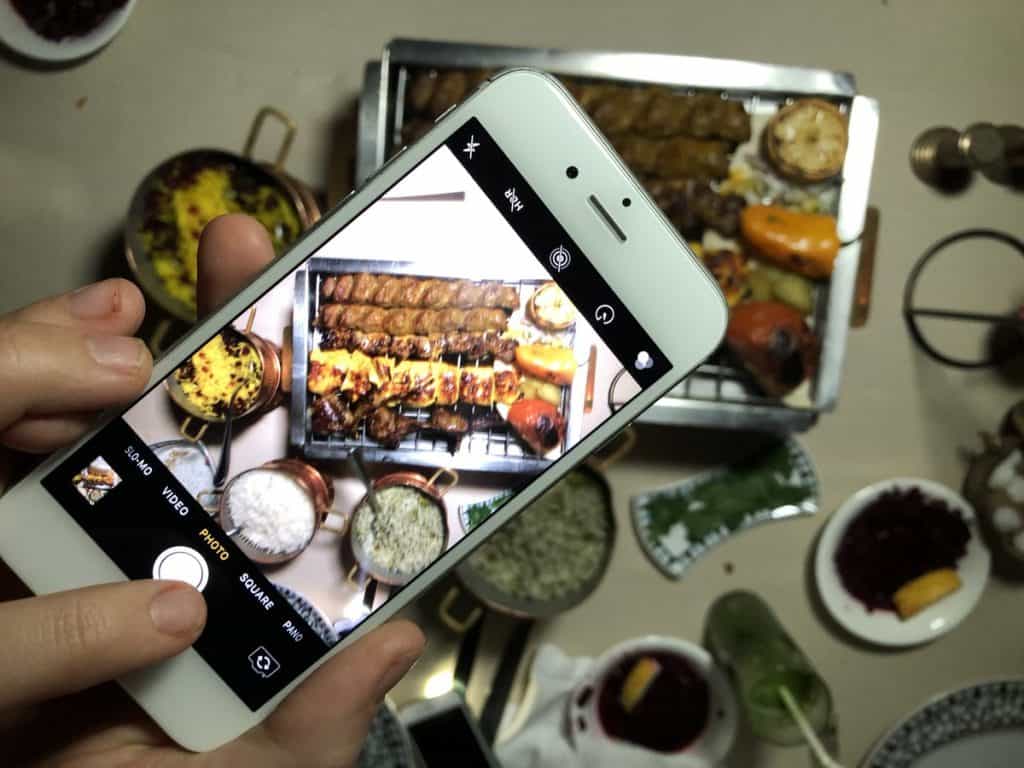
With smart phones, we have access to endless inormation and tools to help us on our gastronomy trips. This collection of apps, websites and services that make out travel easier. We can find the best locally recommended restaurants, the most popular tours, find the most efficient routes to our destinations. All these are a great help in navigating strange new places. These are my favourite travel apps and tools but there are more tips below:
- Google Translate
- Google Maps
- Wise *
- We Chat and Alipay (for visitng China)
- Naver (for Korea)
- eSim (staying conected while on the road)
- VPN (to protect my data and stay connected)
- Power bank
Here’s what you actually need, from tracking down the right restaurant, finding your hotel and keeping your data safe while you’re browsing on foreign Wi-Fi.
Do Your Research Before Every Trip
Most of us default to a quick Google search or ask ChatGPT and call it planning. That works up to a point, but if food is the main reason you’re travelling somewhere, it’s worth doing that bit more. I like to crowdsource recommendations from social media and Reddit (the Reddit app has lots of real recommendations.) Guidebooks are a good source of intelligence and they are a good starting point when planning a trip, most of them come with a pdf version nowadays.
TheFork (known as LaFourchette across much of Europe) lets you browse verified reviews, book tables in real time, and occasionally grab discounts at participating restaurants. It covers over 80,000 venues across Europe and Australia, which makes it genuinely useful for a pre-trip deep-dive rather than a last-minute scramble.
In North America, Yelp is the main app that everyone uses. Even with over 265 million reviews globally, it is not great for UK recommendations as they tried to get traction here but it didn’t get enough momentum.
Use platforms like EatWith and Withlocals who connect travellers with home cooks offering private dining experiences and supperclubs. This is one of the best ways to expereince home cooking of the local cuisine, hosted by locals.
Food tour apps are a great way to discover local food. I used this app in Bangkok, just following the curated places on the app at my own pace. It led to parts of the city that I would not have found on my own and I got to try street food that I had no clue about. Highly recommend doing this kind of tour in addition to any other sightseeing tours you might fancy.
Useful apps for wine and beer lovers
If you’re travelling specifically to eat and drink well, a couple of specialist apps will be essential.
Vivino is essential for wine-focused travel as it has the largest data set of global wines. Just take a photo of a wine label with your phone in a restaurant, a wine shop and it returns crowd-sourced ratings, tasting notes and average pricing from over 65 million users worldwide. It’s saved many a traveller from an overpriced bottle they’d have otherwise ordered blind. The free features are enough for the casual user as the premium features are for serious wine buffs who want to know about cellar management and all that technical stuff.
The Untappd app offers the same features for craft beer fans. It has info for ales and lagers and includes brewery maps that are genuinely useful for planning a trips around tap rooms and brewery tours.
Both apps are free to download and brilliant for anyone who wants to discover local wines and beers on their travels.
Getting Around Without Getting Lost

Google Maps is the default, and it works in most of the world. But if you’re planning to travel anywhere with patchy mobile data, like rural France, the Italian countryside or remote parts of Portugal, Maps.me is worth installing. It stores maps offline and handles rural areas far better than Google does when your signal drops out entirely. If you are visiting cities, you can download a city map from Google map to use offline too.
In China, you will need to download Amap (GaoDe) which is the best local maps with reviews of restaurants and you can even use it to book taxis (Didi).
In Korea, you will get better results with the local equivalent, Naver.
For city food crawls, market visits, and multi-stop evenings where you’re moving between neighbourhoods, Citymapper (available in around 100 cities) gives smarter transit options than standard mapping tools, with real-time updates that actually keep pace with how public transport moves.
How to make sense of menus
Language barriers cost meals — and not just in the obvious way. Sometimes the best dish on the menu is a handwritten daily special that you’d never know to order without a bit of help.
Google Translate’s camera mode now handles over 100 languages and renders translations directly over the original text on your screen, which is remarkably useful when you’re squinting at a specials board in Lisbon or a laminated menu in rural Japan. DeepL offers superior accuracy for European languages if you have the time to type rather than point — it’s particularly good with French, Spanish, and Italian, where the nuances matter.
Staying Safe Online: Don’t Skip This
Here’s something worth taking seriously as it could make a great trip turn bad.
Public Wi-Fi is everywhere, from airports, hotel lobbies and even the café where you’re killing an hour before your dinner reservation. It’s also one of the most common ways personal data gets compromised while travelling. A survey found that 40% of respondents had their information stolen while using public Wi-Fi, and gastronomy travellers, who regularly book restaurants, pay for experiences, and check banking apps on the go, are particularly exposed.
A VPN is worth installing before you leave home. It encrypts your internet traffic and routes it through a secure server, making it significantly harder for anyone on the same network to intercept what you’re doing.
Besides being more secure, it also restores access to UK streaming services and websites that get geo-blocked when you’re abroad. If you are travelling to China where they have blocked most of theapps and sites that you might need, a VPN is essential. VeePN Android VPN works across Android, iPhone, Windows and Mac, runs across multiple devices simultaneously, and has both a free tier and a paid plan for heavier users. Connect before you open any booking app on hotel Wi-Fi. Add it your trip planning list rather than an afterthought.
Learn how to spot phishing scams
It’s also worth knowing that travel-focused scams are increasingly sophisticated. Fake booking confirmations, cloned restaurant websites and fraudulent QR codes promising tourist discounts ways that travellers are fooled. If you receive an email claiming your dinner reservation needs re-confirming with a link to click, treat it with scepticism. Check the sender address carefully and visit type in the restaurant’s website directly rather than following any link.
Two-factor authentication on your email and banking accounts is the additional layer of protection you can add to prevent phising scams from using stolen data.
Managing Your Money at Markets, Food Halls and Street Stalls
Firstly, always carry a bit of cash as backup as digital wallets might not always work.
Revolut and Wise both offer real-time exchange rates with considerably lower fees than traditional banks, and both have free tiers that make them worth having even if you only travel a couple of times a year. They’re particularly useful for markets, food halls, and street vendors who only take cash in local currency, the situations where you’d otherwise be hunting for an ATM and losing money on conversion fees. If you don’t already have one or both of these set up, do it a couple of weeks before your next trip.
I use Wise as they offer good currency conversion rates and it makes it easy to spend in the local currency. You can set up a Wise account here.*
If visiting China, they have a different system. You need to download these apps before you travel and link your cards to the app for them to work. When in China, some people have not been able to get them to link up or it keeps asking you to verify with a picture ID.
Alipay is one of the most popular payment apps and you can order taxis through this app too. If you have issues paying, you can ask a local to send money to your Alipay wallet and use that balance instead to avoid being asked to verify every transaction.
WeChat Pay is like WhatsApp but does a lot more. The locals use it for everything, from payments to chat. The best practice is to transfer some money to your WeChat wallet and you can use that balance with no hassles. If you are still having problems but know someone local, they can use the “relative card” option whihc links a local bank to your wechat which solves the constant verification issue.
You can use your bank card at Chinese ATMS but they will ask for a 6 digit pin. Just add 2 zeros at the end of your 4 digit pin for it to work.
Travelling with Allergies or Dietary Requirements
This is the category of travel tech that doesn’t get nearly enough attention and for some travellers it genuinely matters more than anything else on this list.
AllergyEats maps allergy-friendly restaurants across the United States with user ratings that focus specifically on how seriously each venue takes dietary requirements. Not just whether something is listed on the menu, but whether the kitchen actually understands cross-contamination.
Fig allows you to scan supermarket barcodes and receive instant allergy alerts based on a personalised profile, which is invaluable when you’re self-catering and shopping in a language you don’t speak.
Find Me Gluten Free is the app for coeliac, built using a community of reviewers who rate venues specifically on cross-contamination risk. There’s a difference between a restaurant that has a gluten-free option on the menu and one that genuinely understands how to prepare it safely. this app helps you identify that.
Tips on staying safe online while away
Travelling today is easier with useful apps and websites but you still need to be vigilant. Keep your apps updated before and during your trip, security patches matter more than most people realise. Store offline copies of key bookings in a notes app rather than relying solely on email, which requires a signal to access. Back your phone up to cloud storage regularly while you’re away. Carry an power bank in case you run out of battery and can’t access your apps.
And trust your instincts. If a restaurant’s online presence looks hastily put together, the booking process asks for unusual payment details, or the reviews feel suspiciously uniform and oddly phrased, there might be something fishy going on.
The best food travel is still about curiosity, getting local recommendations and being open to the new and unexpected. But a little preparationand research and the right tools quietly running in the background, removes the friction that gets in the way of all of that. All that you have to do on your trip is to maximise your time and have the best experiences without worrying about scams or being taken for a ride.